2026 departure sold out. Two 2027 departures now booking — June 25 and July 11. Each tour departs on the published date regardless of group size; your booking is confirmed the moment your deposit is received.
Request the Full Itinerary →
Hokkaido in summer is the Japan nobody tells you exists.
When Tokyo sits at 38°C and Kyoto's stone streets radiate heat late into the night, Hokkaido is at 22–26°C with a dry breeze off the Sea of Japan. The light lasts until after nine. The forests are full of birch and spruce rather than the cedar of Honshu. The food is dairy-first, seafood-second, and both are better here than anywhere else in the country. The Japanese have known this for a century. The rest of the world is still catching up.
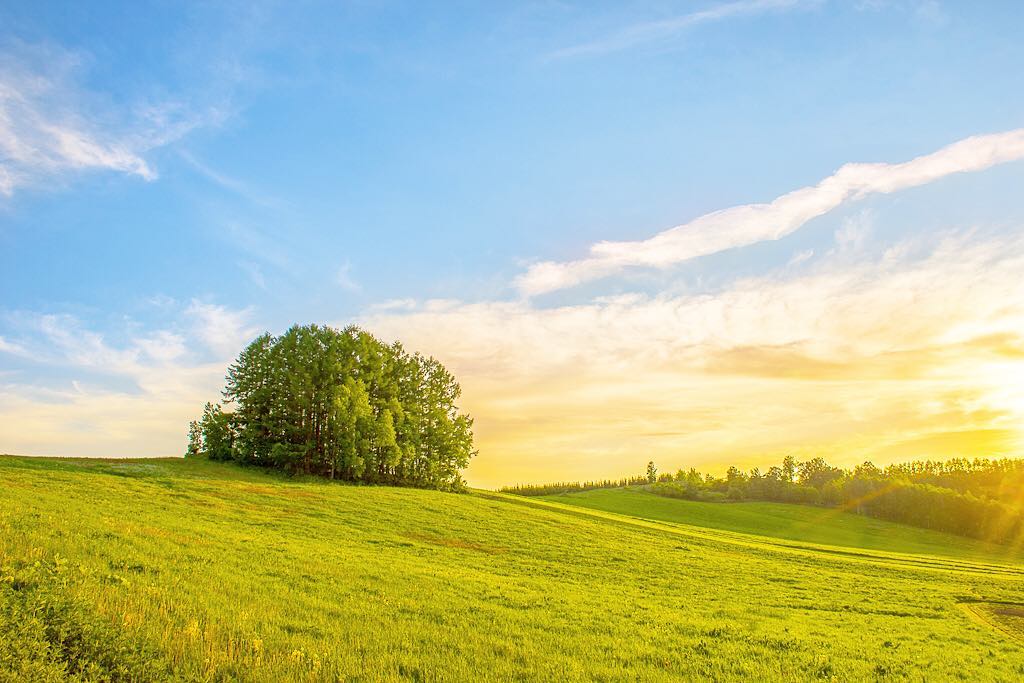
This tour is built around what Hokkaido does in summer that no other Japanese landscape can. The lavender at Farm Tomita in Furano at the morning hour before the buses arrive. The Biei patchwork hills on farming roads that do not appear in guidebooks. Japan's clearest lake, where the private rotenburo on your terrace looks down into ten metres of volcanic water. Shakotan Blue along the northwest coast, with an uni bowl from the fisherman's morning catch. Yoichi whisky at the source. Lake Tōya fireworks launched from a barge every single night, watched from your own terrace. Otaru's herring-baron mansions, a ryokan furnished with Yi Dynasty antiques, and farewell tempura at the most celebrated counter in the north.
The 2026 departure sold out. Two 2027 departures — June 25 and July 11 — are now the only way onto this route. We run the same six-region rhythm on each: two nights at a forest ryokan in the Biei onsen district, two at Japan's clearest lake, two at Noboribetsu, one on Lake Tōya, two at a Yi Dynasty-furnished inn in Otaru, and two in Sapporo. Twelve nights. One hundred and twenty years of Hokkaido modernity visible in every stop.
涼 is the Japanese word for coolness — specifically the felt relief of coolness within summer heat. It is a concept loaded into Japanese poetry, design, and landscape: the shade of a bamboo grove, the sound of a stream running beside a teahouse, the evening breeze on the lake. Hokkaido is the suzushi destination of the Japanese summer. Tokyoites escape here. Kyoto restaurants source here. The north has air conditioning written into its latitude.
The person who designed this tour leads it
This is not an itinerary assembled by a sales team and handed to a local guide. Every ryokan on this tour has been stayed at by the Tour Director who will sit at the table with you. The uni restaurant, the whisky distillery, the Yi Dynasty-furnished inn — every supplier relationship has been built in Japanese, over years, in the north where those relationships matter most.
Two senior Tour Directors accompany every departure. They hold the direct relationships with each chef, each ryokan owner, each mountain road. They adapt in real time when weather shifts or conditions change. You never see the effort. You only feel its absence. That is おもてなし — hospitality that anticipates.
This tour is not for everyone
If you are picking between a Honshu spring tour and Hokkaido summer as a first visit to Japan, spring is probably the right answer — Kyoto in April is the textbook introduction. Hokkaido summer rewards context; it makes more sense once you understand what Japan's main islands are, because the north feels deliberately different.
This tour is for travellers who have already been to Japan once, or who want their first visit to be on the less-travelled island. For couples who prize the morning lavender field without the buses, the uni from the fisherman's hand rather than the supermarket, and the kind of northern quiet Tokyo has not known for four hundred years.
Six regions. Eleven nights. The luminous north.
The route opens with two nights at a forest ryokan in the Biei onsen district, crosses central Hokkaido to Japan's clearest lake at Shikotsu, moves south to Noboribetsu's four onsen springs, west to Lake Tōya's fireworks evenings, north-west to Otaru's herring-baron canal, and closes in Sapporo. Private luxury van throughout. New Chitose in, New Chitose out.
Biei
2 nightsA forest ryokan in the Shirogane hot spring district at the foot of the Tokachidake volcanic range. Seventeen rooms in birch and spruce forest, private rotenburo among the trees. The onsen source is the same mineral water that colours the Blue Pond a few kilometres away.
Furano Lavender at the Opening Hour
Farm Tomita at half past eight in the morning. The Tradicional lavender field — the original, planted in 1958 — is a solid wall of purple running to the treeline, Tokachidake still carrying snow on the peaks behind. The tour buses from Sapporo arrive at 10:30. Your Tour Director leads you past the tourist entrance to the elevated viewpoints and the older fields where the crowds thin to nothing.
Biei Patchwork and the Blue Pond
The patchwork hills on farming roads that do not appear in guidebooks — the geometry of the planted fields creates patterns visible only from certain elevations at certain times of year. Shikisai no Oka for the flower fields at peak. The Blue Pond — volcanic aluminium suspended in the Biei River, a colour that looks manipulated but is not. Shirahige Falls dropping into the same blue water from a cliff face above.
Lake Shikotsu
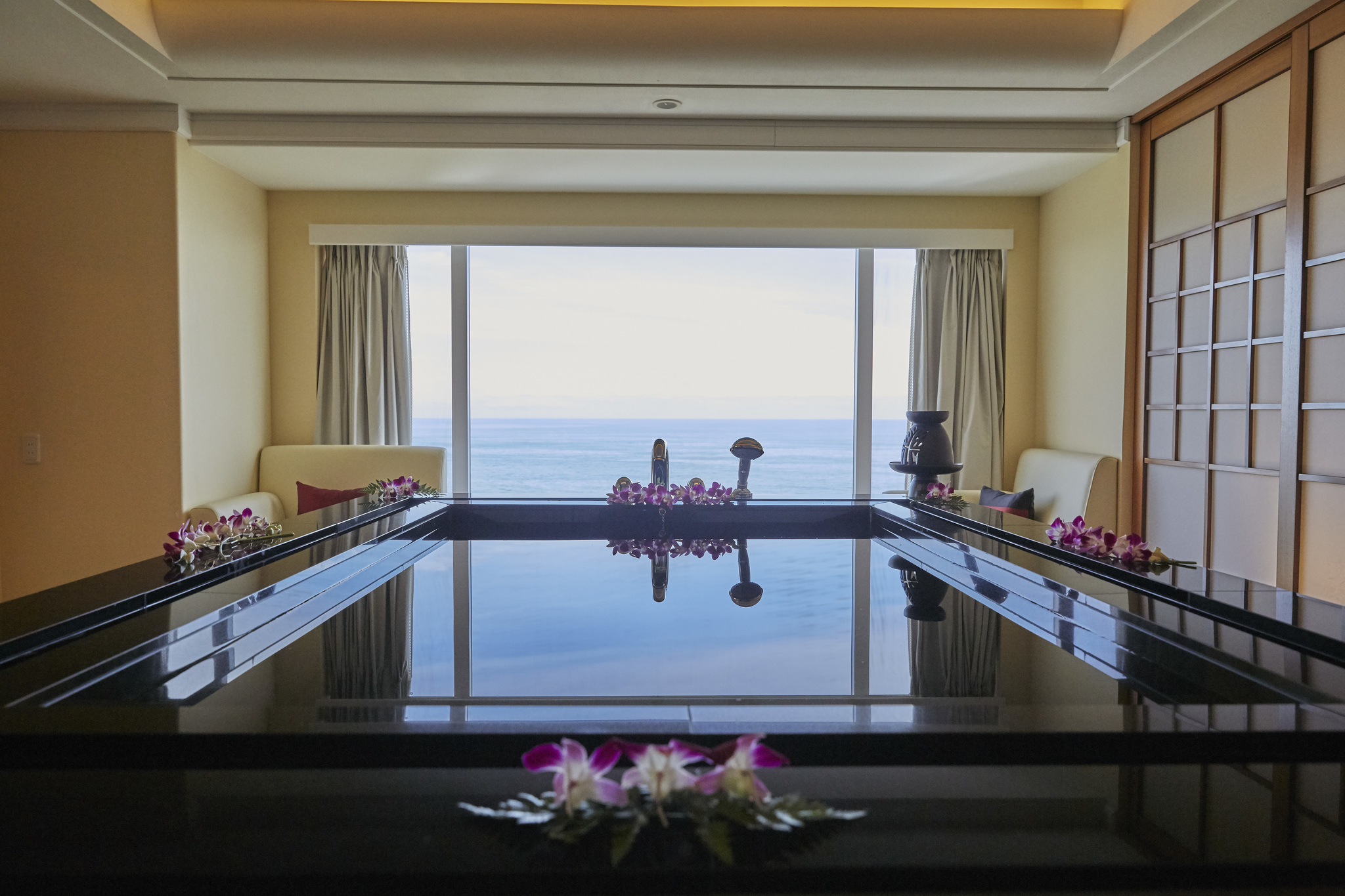
2 nightsTsuruga's flagship. Twenty-five suites over 100m² each, every one with a private rotenburo on a lakeside terrace. Japan's clearest lake — water clarity measured at over ten metres. The colour locals call Shikotsu Blue is not marketing. It is geology and summer light.
A Day That Is Deliberately Empty
Day 4 has no programme. No van. No scheduled anything. This is the only fully empty day on the tour and it is placed here on purpose. The private rotenburo. The 100m² suite. The lake. The mountains. An optional clear-hulled kayak over the volcanic bed ten metres below. Or nothing at all. The programme stops here because the programme is supposed to stop here.
Noboribetsu Onsen
2 nightsA ryokan with four different hot spring types drawn from the volcanic system below — sulphur, iron, salt, and alum, each with different mineral composition and colour. Hell Valley is a five-minute walk. Private kaiseki dining rooms.
Upopoy — The Ainu Museum
The National Ainu Museum at Shiraoi, opened 2020 on the shore of Lake Poroto. Two and a half hours with a private specialist guide across six galleries — the bear ceremonies, textile traditions, oral histories that predate written Japanese by centuries. A mukkuri or tonkori workshop. Ainu-inspired lunch at Haru Ran Na. A culture still alive, and the guide is part of it.
Lake Tōya
1 nightAn all-suite property on the Lake Tōya shore. Every room faces the water. Every room has a private rotenburo on its balcony. Usu-zan erupted in 2000 and the mountain is still monitored continuously.
Nightly Fireworks from Your Terrace
From April 28 through October 31 every year, the Tōya Long-Run Fireworks launch from a barge in the middle of the lake at 20:45. No booking. No crowds. No stadium seating. You watch from your private terrace, the explosions reflected in the water below, the volcanic mountains dark behind them. One hundred and eighty nights a year; your night is one of them.
Otaru
2 nightsUnlike anything else on this tour or any other. Eighteen rooms, each designed differently, furnished with Yi Dynasty ceramics and Ming-era antiques collected by the owner over decades. Every room has a private semi-outdoor onsen. All-inclusive drinks — Yoichi whisky from the distillery thirty minutes up the coast, Hokkaido wines, local sake, craft beer.
Shakotan Blue and the Fisherman's Uni
Ninety minutes north-west of Otaru, the coast road narrows and the water below turns a blue with its own name — Shakotan Blue, produced by depth and the volcanic seabed. Kamui Cape runs along a razor-back ridge to a lighthouse at the end of the world. Lunch at a restaurant run by a fishing family in Bikuni — the uni is Ezo-bafun, caught that morning from the water outside the door. Two thousand portions across the entire summer. Reservation three days minimum.
Nikka Whisky at Yoichi
Masataka Taketsuru trained at Campbeltown in 1918 and returned to build the same conditions in Japan. He chose Yoichi for its cold damp air, its sea proximity, its volcanic water. The Scottish-style stone buildings of the original distillery still stand. A tasting programme that includes expressions available only at the distillery.
Sapporo
2 nightsHokkaido's oldest Western-style hotel, Executive Floor, Club Lounge from arrival. Two nights as the city chapter — Odori Park in summer flower, Moerenuma for Noguchi's landscape sculpture, Hokkaidō Jingū Shrine, Jingisukan at the original 1876 brewery, and farewell tempura at Araki.
Moerenuma — Isamu Noguchi's Final Landscape
A 189-hectare park designed entirely by Isamu Noguchi. He accepted the commission in 1988, died three months later, and the city built it exactly as he drew it. The glass pyramid. The fountain that erupts 25 metres into the summer sky every fifteen minutes. The play mountain. A landscape sculpture on the scale of a city district, and free to enter.
Farewell Tempura in the North
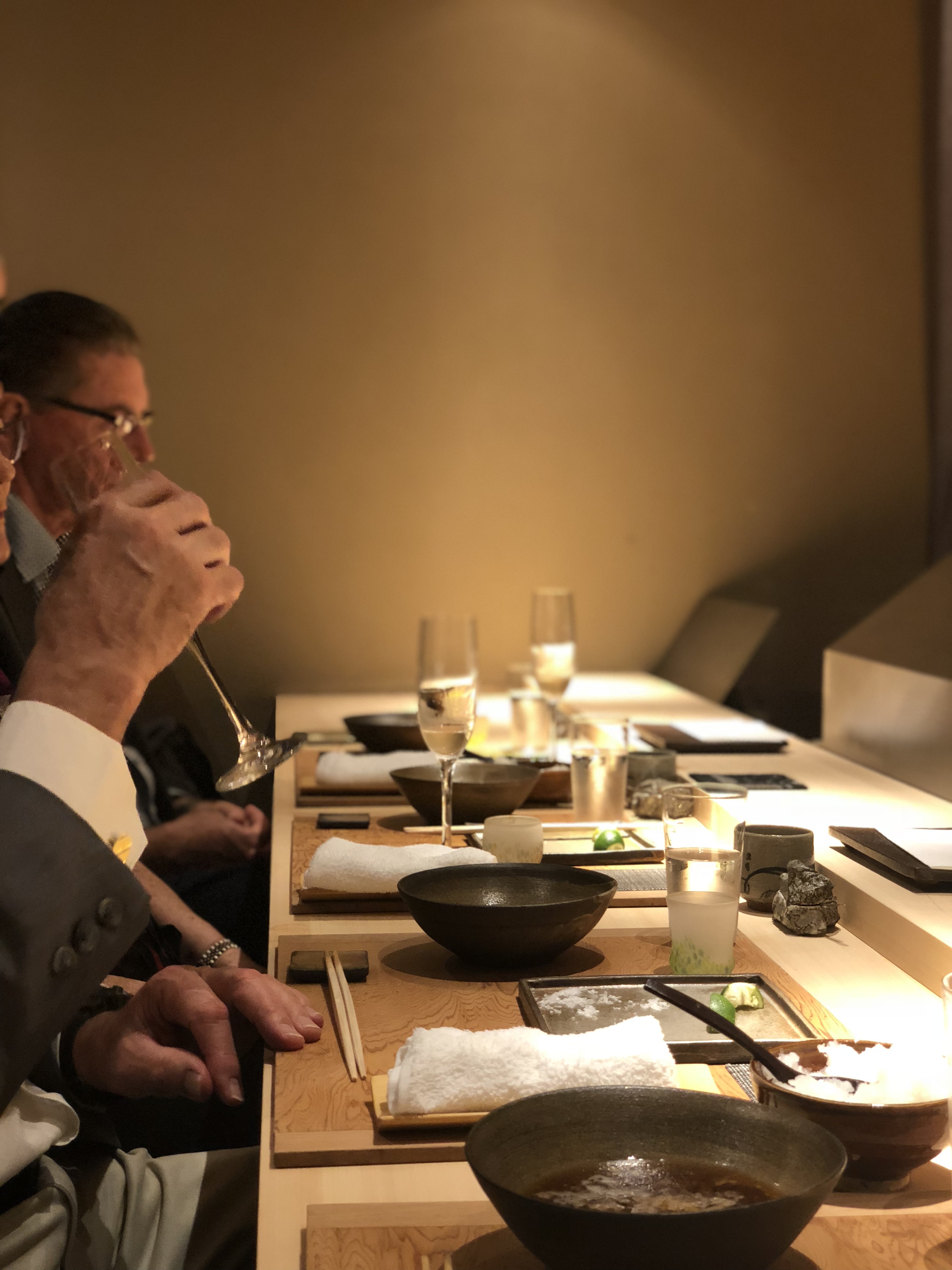
Chef Yoshiyuki Araki trained in Tokyo under masters of the Edo-style school. A counter of eight or nine seats — the group fills the room. Twelve courses built on Hokkaido summer ingredients: vegetables, prawns from the coast, mushrooms from the forest. The most serious version of the form, in the city where it belongs. The last meal of the tour.
“In July the lavender field at Farm Tomita, at eight thirty in the morning, with the Tokachidake peaks still holding snow behind it, is a landscape you would drive fourteen hours to see. We drive thirty minutes from the ryokan. That is the reason this tour exists.”
A second Hokkaido waits to the east.
A three-night extension to Lake Akan in eastern Hokkaido — the living Ainu community of 130 people, the Marimo Cruise on a National Special Natural Monument, Lake Mashū’s near-perfect water clarity (one of the clearest measured anywhere on earth), and the crane wetlands of Kushiro. Departure 2 only (July 22 tour end).
Lake Akan & Kushiro Wetlands
Hinanoza at Lake Akan — 25 rooms with private rotenburo facing the lake. Marimo Cruise, the Ainu Kotan community, Lake Mashū, Io-zan's volcanic fields, the Kushiro wetlands. Concludes at Kushiro Airport.
In their words, not ours
“We had been to Honshu twice. This was the tour that made us understand Japan actually has two countries inside it. The lavender morning at Furano and the Shakotan uni lunch will stay with us forever.”
“The empty day at Ao no Za was the best decision the tour makes. A hundred-square-metre suite, a private rotenburo, the clearest lake in Japan, and absolutely nothing to do. We have never relaxed like that anywhere.”
“Kuramure is the property that justifies the tour on its own. The all-inclusive bar, the Yi Dynasty ceramics, the herring chazuke at midnight. We did not want to leave.”
Where you stay matters as much as what you see
Six distinct properties in six distinct registers — forest ryokan, Tsuruga flagship suite, independent Noboribetsu institution, all-suite lakeside resort, antique-furnished inn, and Hokkaidō's oldest Western-style hotel.
北国 — literally “the snow country” — is the Japanese literary word for Hokkaidō and the Tōhoku far north. Kawabata's 1948 novel of that name opens with a train emerging from a tunnel into a different country. Summer in the kita-guni is brief — ten weeks between the late lilac bloom and the first frost — but in those weeks the north is at its most itself: cool, luminous, and deliberately unhurried. This tour is built around that window.
One price. No surprises. No calculations.
From USD $15,500 per person, twin share. No single supplement. Prices include all applicable taxes.
Questions we are often asked
Eight places per departure.
June 25 or July 11, 2027.
The lavender at the opening hour. The lake suite where Day 4 has nothing in it. Shakotan uni at the fisherman's counter. Tōya fireworks from your terrace. Kuramure's Yi Dynasty rooms and the all-inclusive bar. The farewell tempura in Sapporo. You will leave Hokkaidō knowing what the Japanese summer actually is.
Submit an enquiry and we will send you the full itinerary — every hotel, every experience, every detail. No obligation. No pressure. Just the information you need to decide which departure suits you.
2026 sold out. Both 2027 departures are guaranteed departures. Your booking is confirmed the moment your deposit is received.
Intimate. Considered. Perfect.