This tour departs on the published date regardless of group size. Your booking is confirmed the moment your deposit is received. No minimum numbers. No cancellation risk.
Request the Full Itinerary →
The cherry blossoms Honshu never sees, in the season Japan saves for itself.
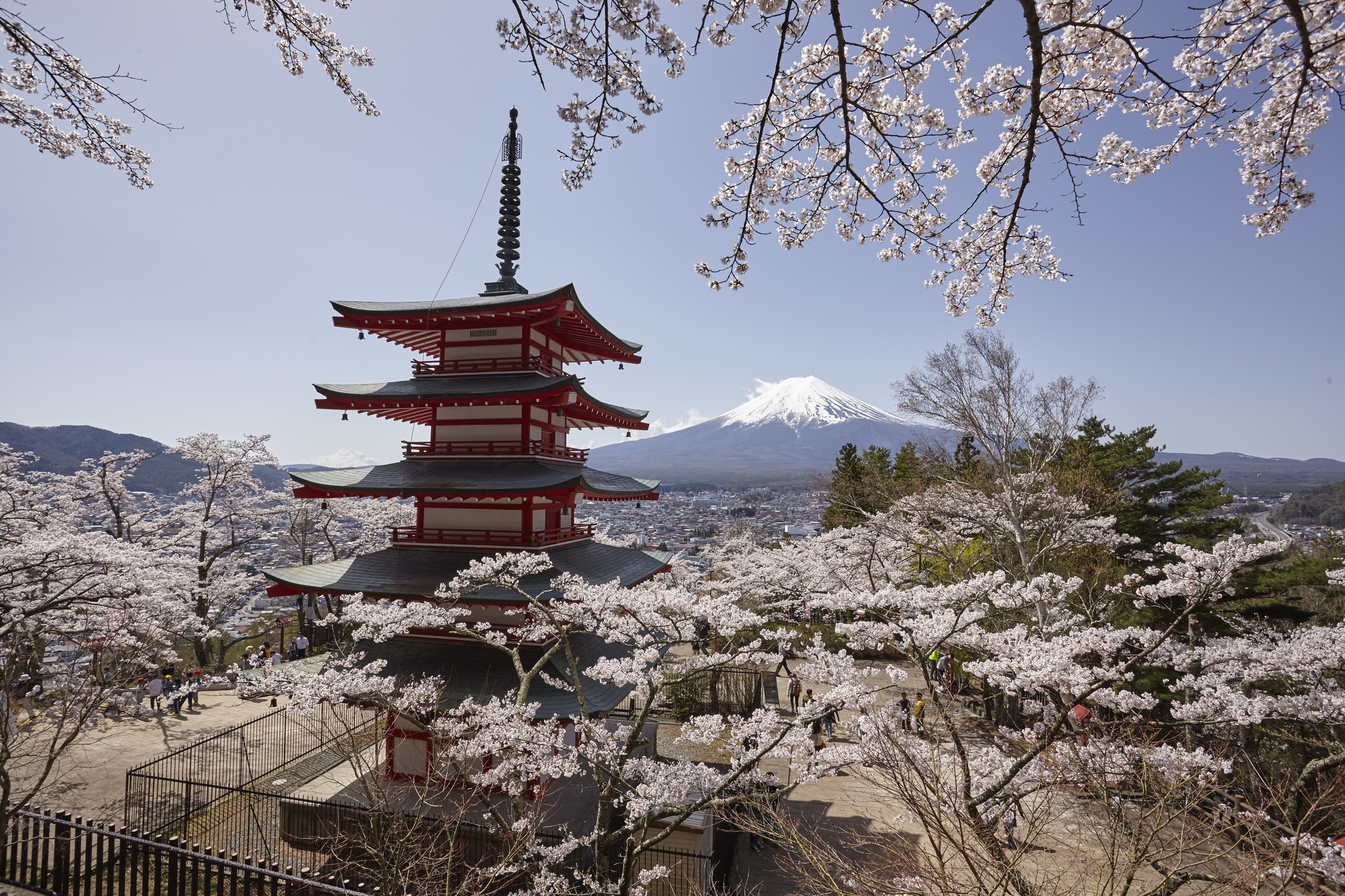
Hokkaido's cherry blossoms are a different species. Where Honshu's Somei Yoshino bloom pale and alone, Hokkaido's Ezo-yamazakura and Chishima-zakura bloom deep pink alongside their leaves — a richer, more textured canopy that appears in relay across the island from late April through mid-May. By the time Kyoto's blossoms have fallen, Hokkaido's are just opening. The timing is the first gift of this tour.
The second is access. Matsumae Park, Japan's northernmost feudal castle town, holds 250 cherry varieties and 10,000 trees planted in relay over four centuries — a botanical inheritance no other site in Japan can match. The eight-kilometre 登別桜並木 avenue — two kilometres of tunnel on the approach to Noboribetsu, planted in 1934 by local residents who spent two years transplanting trees from the surrounding mountains — is the arrival no bus tour has ever attempted to stage. Endemic species at Mori Town exist nowhere else on earth. All of this sits north of where most Japan itineraries ever reach.
The third is the structure. The tour opens with two nights at Japan's clearest lake — Shikotsu, forty minutes from the airport, where a private in-room onsen and Ainu cultural programme woven into the property architecture sets the register for everything that follows. It moves through the volcanic interior at Lake Toya, descends to the onsen therapeutics of Noboribetsu, crosses to Onuma at the foot of Komagatake volcano with Matsumae and Hakodate as day trips, and closes in Sapporo with Moerenuma's Noguchi landscape, the Nikka distillery at Yoichi, and the most celebrated tempura counter in the north. Twelve nights, six regions, a cherry blossom season Japan reserves for itself.
北 is the Japanese word for north — the direction, the season, the character. Hokkaido means “the North Sea road,” named when the island was brought into the Japanese state in 1869. The north has its own register: colder springs, deeper pinks, quieter towns, older onsen, a living Ainu culture that exists nowhere else in the country. This tour is built around that register. It is the Japan most overseas visitors miss entirely.
The person who designed this tour leads it
This is not an itinerary assembled by a sales team and handed to a local guide. Every ryokan on this tour has been stayed at by the Tour Director who will sit at the table with you. Every cherry blossom site has been walked in the correct week. Every supplier relationship has been built — in Japanese, over years, in the north where those relationships matter most.
Two senior Tour Directors accompany every departure. They hold the direct relationships with each chef, each ryokan, each sakura forecast. When timing shifts — and in Hokkaido it always shifts — they adapt in real time. You never see the effort. You only feel its absence. That is おもてなし — hospitality that anticipates.
This tour is not for everyone
If this is your first time in Japan, we would suggest our Honshu spring tour. Hokkaido is where travellers come to understand what Japan's north is — an island of volcanoes, onsen therapeutics, Ainu heritage, and cherry blossoms unlike the ones in the guidebooks. It rewards context.
This tour is for travellers who already know what Kyoto feels like and want the other Japan: wilder, quieter, more itself. For couples who understand why three nights in Sapporo matter, and why the approach to Noboribetsu through an eight-kilometre tunnel of Ezo-yamazakura is worth the whole journey.
Six regions. Twelve nights. The northern sakura.
The route opens at Lake Shikotsu — forty minutes from New Chitose Airport by private van — moves west through the Shikotsu-Tōya National Park to the volcanic caldera of Lake Toya, descends to the therapeutic onsen of Noboribetsu via an eight-kilometre cherry-blossom tunnel, crosses the Oshima Peninsula to Onuma at the foot of Komagatake volcano, and closes with three nights in Sapporo. Private luxury van throughout. New Chitose in, New Chitose out.
Lake Shikotsu
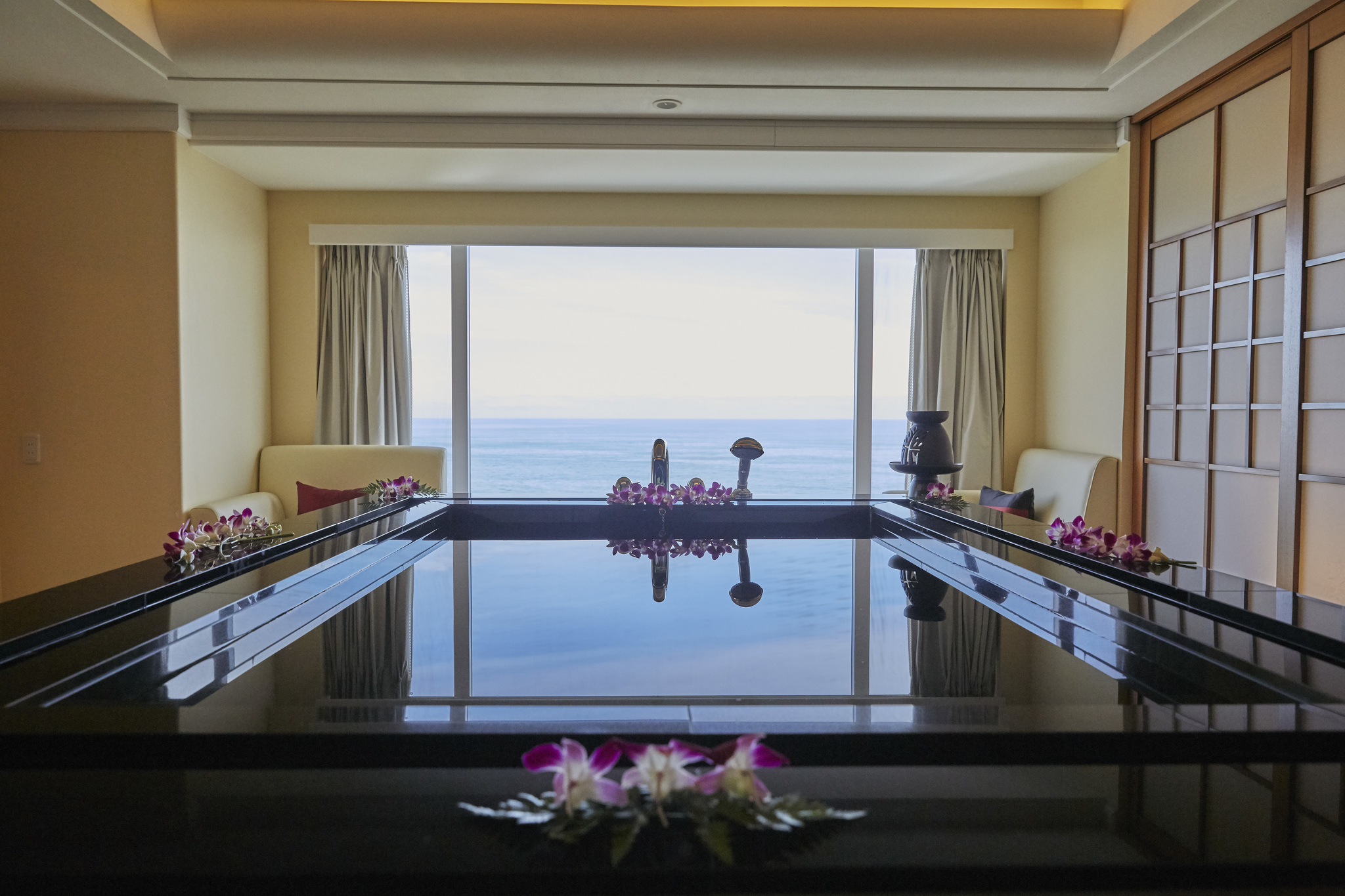
2 nightsJapan's clearest lake, forty minutes from the airport. A private in-room onsen facing the water. Chishima-zakura and Ezo-yamazakura opening along the lakeshore. Two nights to cross the timezone and inhabit the bath before the tour begins moving.
Ainu Culture at the Lake
The Tsuruga Group's Shikotsu properties have embedded Ainu cultural practice into the architecture and daily programme — indigo dyeing workshop using traditional Ainu patterns and natural pigments, traditional dress in the property grounds. This is not a museum visit. It is how the tour opens, in the landscape where the culture is still read.
Lake Toya
2 nightsA hillside property above an almost-perfectly-circular caldera lake, Mount Yōtei visible to the north. French cuisine at dinner — a deliberate break in register. The 2000 Usu-zan eruption still actively documented by the Volcano Science Museum at Tōyako Onsen.
The Caldera from the Water
Private boat on Lake Tōya in the morning, before the public ferries run. The lake is perfectly circular, 11 kilometres across, formed by a volcanic collapse. Nakajima Island at the centre. The caldera geology makes sense from the water in a way the shore never quite achieves. Afternoon: the Usu-zan ropeway to the summit of one of Japan's most active volcanoes.
Noboribetsu Onsen
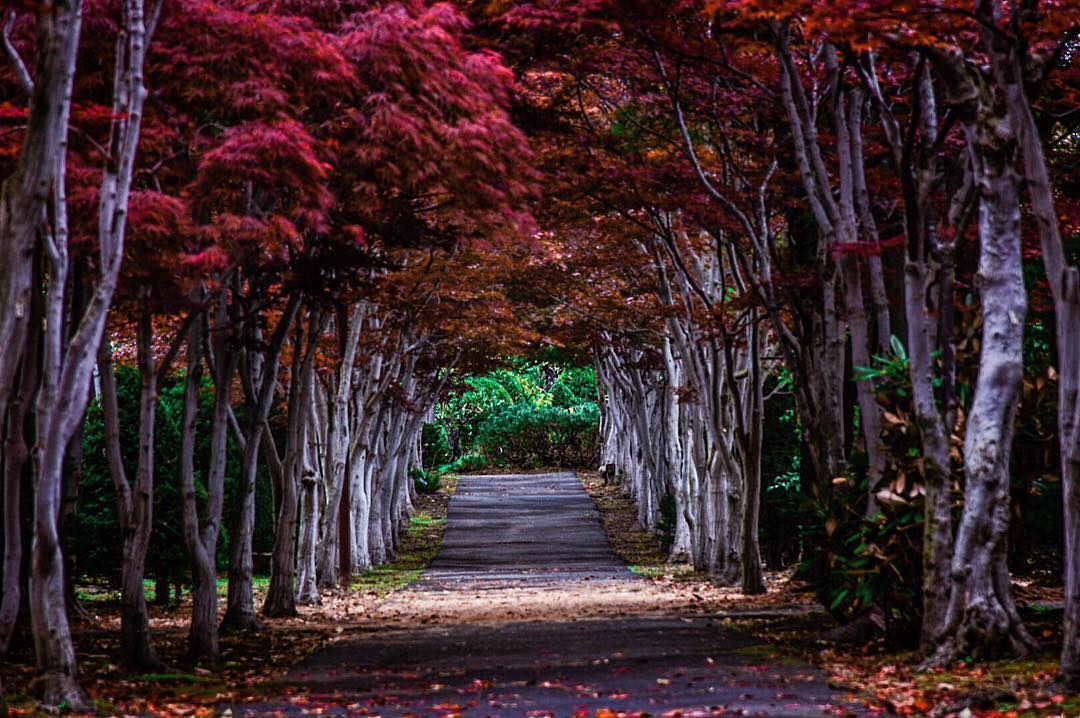
2 nightsHokkaido's oldest and most respected independent ryokan. Four distinct onsen spring types. The 8-kilometre Ezo-yamazakura tunnel on the approach — eight kilometres of cherry blossoms lining the road into the town, planted in 1934, grown into a complete canopy. The van drives through without stopping. Guests look up through the glass.
A Geological Walk through Hell Valley
Jigokudani — “Hell Valley” — is a ten-minute walk from the ryokan. Red-brown volcanic earth, boiling sulphur vents, steam rising from cracks in the rock, a river running visibly hot with mineral content. Forty-five minutes with the Tour Director explaining the eleven distinct spring types, the chemistry of each, and why the onsen at Takinoya is connected to everything you are looking at.
Onuma & Hakodate
3 nightsA Tsuruga Group lakeside property at the foot of Komagatake volcano in the Onuma national park. Three nights as a base — one for Upopoy and the drive south, one as a day trip to Matsumae, one as a day trip to Hakodate — without any bag movement.
Upopoy — The National Ainu Museum
Japan's national museum of Ainu history and culture, opened 2020. Two and a half hours with a private specialist guide across the six permanent galleries — language, worldview, material culture, relationship with land and sea. A mukkuri (mouth harp) and tonkori (five-string zither) workshop. Ainu-inspired lunch at Haru Ran Na inside the complex. The second chapter of the tour's Ainu arc.
Matsumae — 250 Varieties, 10,000 Trees
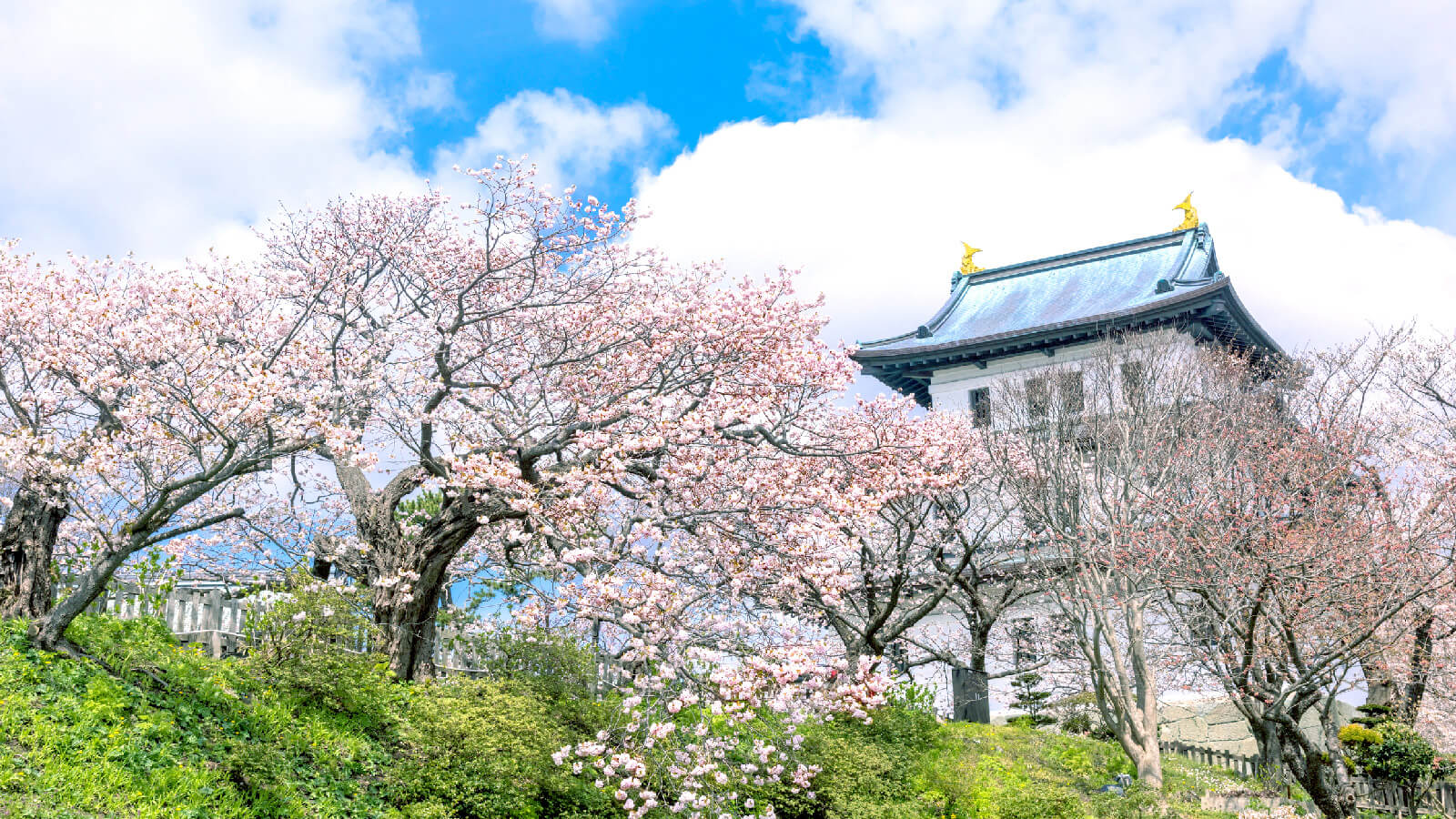
Japan's northernmost feudal castle town, ninety minutes southwest of Onuma. The castle park holds approximately 250 cherry varieties and 10,000 trees in relay across a full month — in early May, the late-blooming Yaezakura are at peak while mid-season trees retain colour. The Three Famous Trees: the 300-year-old Kechimyaku-zakura at Kōzenji, the Ezo Kasumi-zakura at Ryūunin, the Meoto-zakura at Tenjinzakamon Gate. The first LJT hanami picnic — premium bento from Hakodate, cold sake, rugs on the grass inside the park with the castle wall rising above.
Hakodate — Morning Market, Motomachi, Goryōkaku
The morning market at its working hour, 9am when the fish from overnight boats are on the stalls. Motomachi — the preserved foreign concession district from Hakodate's 1859 treaty-port era. Goryōkaku, the star-shaped bastion fort built in 1866, with 1,600 cherry trees across the grounds and a 90-metre tower giving the aerial view. Mount Hakodate by ropeway at dusk — one of Japan's three great night views.
Sapporo
3 nightsHokkaido's oldest Western-style hotel, executive floor, Club Lounge from arrival. Three nights as the city chapter — Maruyama Park for the second LJT hanami picnic in an urban register, Moerenuma for Isamu Noguchi's only complete landscape work, Otaru and Yoichi as a day trip on the final full day.
A Hanami Picnic in Maruyama Park
The second LJT hanami picnic — same ritual as Matsumae, deliberately different register. Urban park energy. Sapporo dairy in the bento, Hokkaido cheese and fresh bread, cold Sapporo brewery sake. The park is noisy, social, full of locals with blue sheets and charcoal smoke. After eleven days of forests and lakes, this is exactly the right arrival into the city.
Moerenuma — Isamu Noguchi's Final Landscape
A 90-hectare park in east Sapporo designed by Isamu Noguchi as a total sculpture — approved before his death in 1988 and completed in 2005. The Mount Moere earth mound, the Glass Pyramid HIDAMARI, the Tetra Mound. The Sakura no Mori contains 1,900 late-blooming cherry trees that peak a full week after central Sapporo — the timing on this tour is deliberate.
Otaru Sushi, Yoichi Whisky
The final full day. Otaru's canal district before the tourist shops open. Lunch at a counter that appears in the Tabelog Sushi East Top 100 — omakase, what came from Hokkaido waters this morning, presented one piece at a time. Onward to Yoichi — Masataka Taketsuru trained at Campbeltown distilleries in 1918 and returned to build the same conditions in Japan. The original Nikka distillery still stands. A private tasting of expressions unavailable outside Japan.
Farewell Tempura in the North
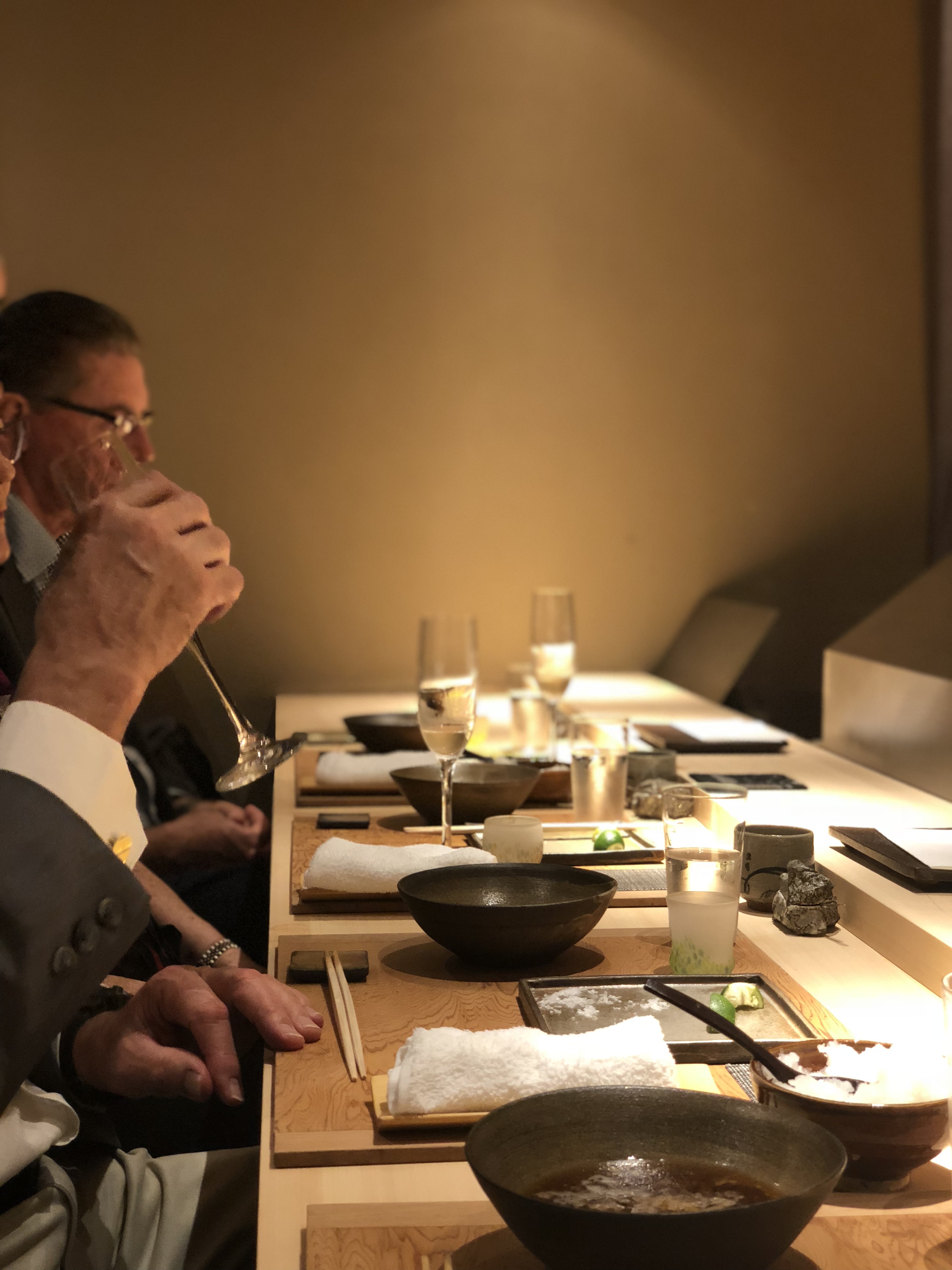
Chef Yoshiyuki Araki trained at one of Tokyo's foremost three-starred kitchens before bringing his practice to Sapporo. A counter that seats eight — the group fills the room. Course after course built on Hokkaido ingredients: sea urchin wrapped in shiso, young bamboo shoots, local mountain vegetables, river fish. The most serious version of the form, in the city where it belongs.
“In Honshu the cherry blossoms are a week of pale pink and then they are gone. In Hokkaido they are a month of deep pink that moves across an island at its own pace. The north simply has more time.”
Your tour ends in Sapporo. The Ainu story has another chapter.
A three-night extension to Lake Akan in eastern Hokkaido — the living Ainu community of 130 people, the Marimo Cruise on a National Special Natural Monument, the digital-art Ainu performance at Ikoro, Lake Mashu’s near-perfect water clarity (one of the clearest measured anywhere on earth), and Kussharo-ko with its caldera-rim views. The chapter the main tour opens, the extension closes.
Lake Akan
The Tsuruga Group's 鄙の座 Hinanoza — 25 rooms with private rotenburo facing the lake. Marimo Cruise, the Ainu Kotan community, アイヌシアター イコロ, Lake Mashu, Io-zan's volcanic fields. Concludes at Kushiro Airport.
In their words, not ours
“We had done Honshu twice before. Hokkaido is a different country. The eight-kilometre cherry blossom tunnel into Noboribetsu is the single most extraordinary arrival we have had anywhere.”
“Matsumae with the hanami picnic inside the castle park, two hundred and fifty varieties in relay overhead, was the moment the tour earned itself. The bento was the finest meal we had eaten in Japan.”
“The Ainu programme was the surprise of the tour. By the time we reached Upopoy on Day 7 we already understood what we were seeing. Very few operators would bother with that arc.”
Where you stay matters as much as what you see
Four Tsuruga Group properties anchor the tour, chosen for consistent service standards and direct corporate relationship; an independent Noboribetsu ryokan and Sapporo's oldest Western-style hotel complete the six-stop rhythm.
咲 is the Japanese verb for blooming — a character used for flowers, fruit, and certain human achievements whose beauty only becomes visible at the exact right moment. The Hokkaido cherry blossoms 咲く across an entire month, region by region, variety by variety, in a relay the rest of Japan does not match. This tour is built around that relay. The season cannot be hurried. It has its own time, and it waits for no one.
One price. No surprises. No calculations.
USD $18,500 per person, twin share. No single supplement. Prices include all applicable taxes.
Questions we are often asked
Eight places. One departure.
April 28, 2027.
Your last morning in Sapporo. The Club Lounge. Hokkaido dairy one more time. The van to New Chitose. Twelve nights carried inside you — cherry blossoms in seven distinct locations, three Tsuruga ryokan, the Ainu arc from design to history, a volcanic island still actively rearranging itself.
Submit an enquiry and we will send you the full itinerary — every hotel, every experience, every detail. No obligation. No pressure. Just the information you need to decide.
Guaranteed departure. Your booking is confirmed the moment your deposit is received.
Intimate. Considered. Perfect.