This tour departs on the published date regardless of group size. Your booking is confirmed the moment your deposit is received. No minimum numbers. No cancellation risk.
Request the Full Itinerary →
Autumn in Japan is not the second-best season. It is a different country.
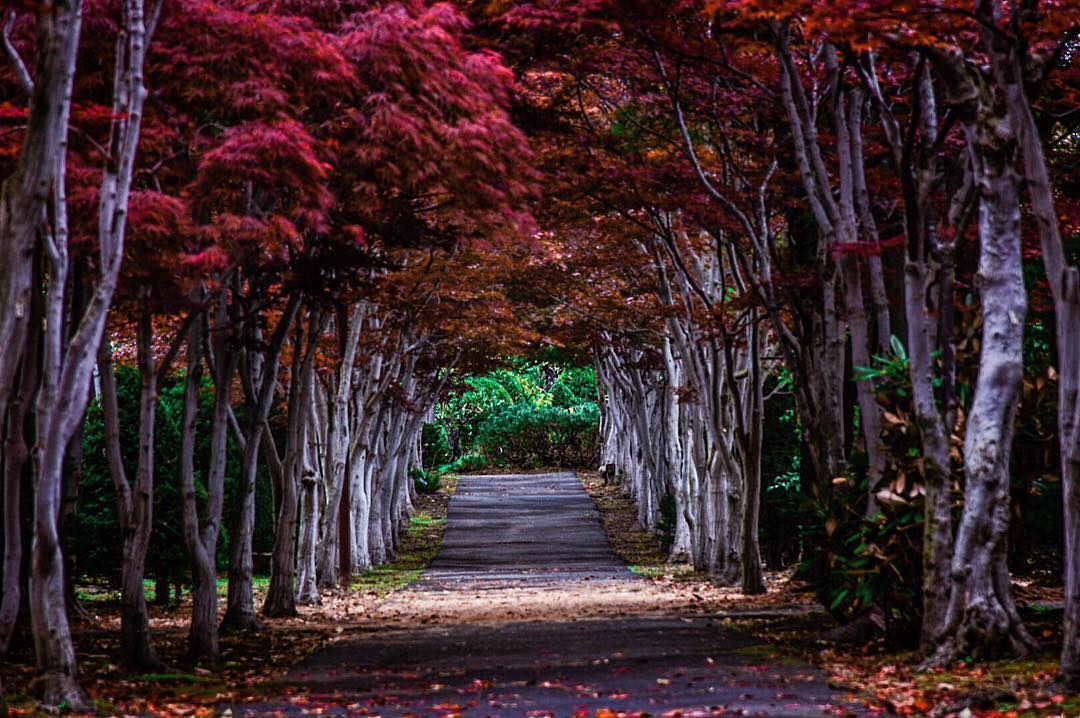
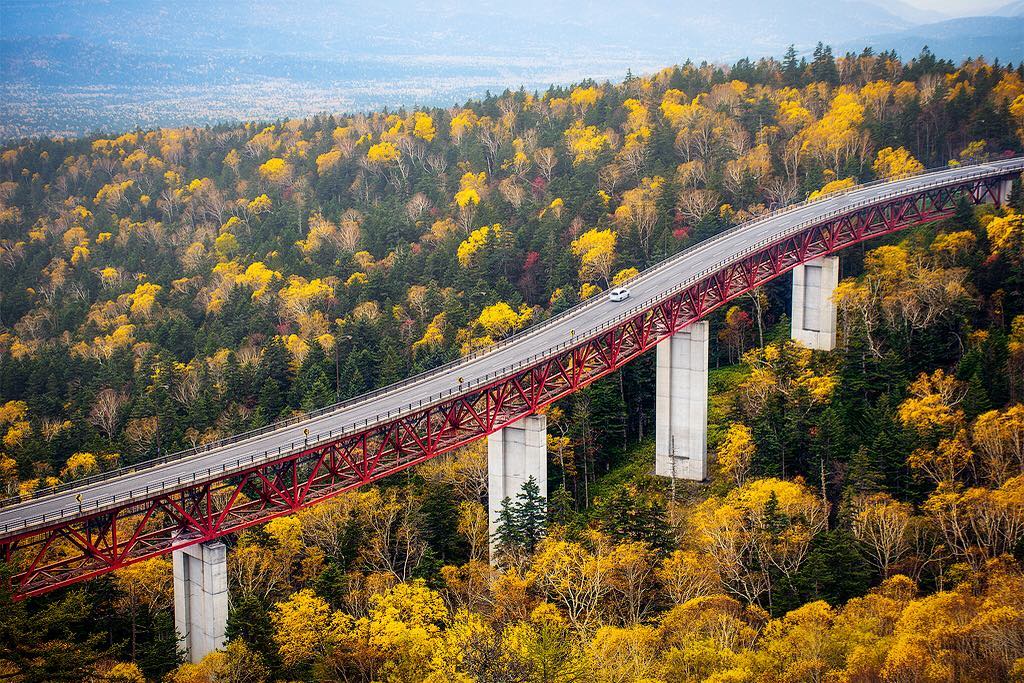
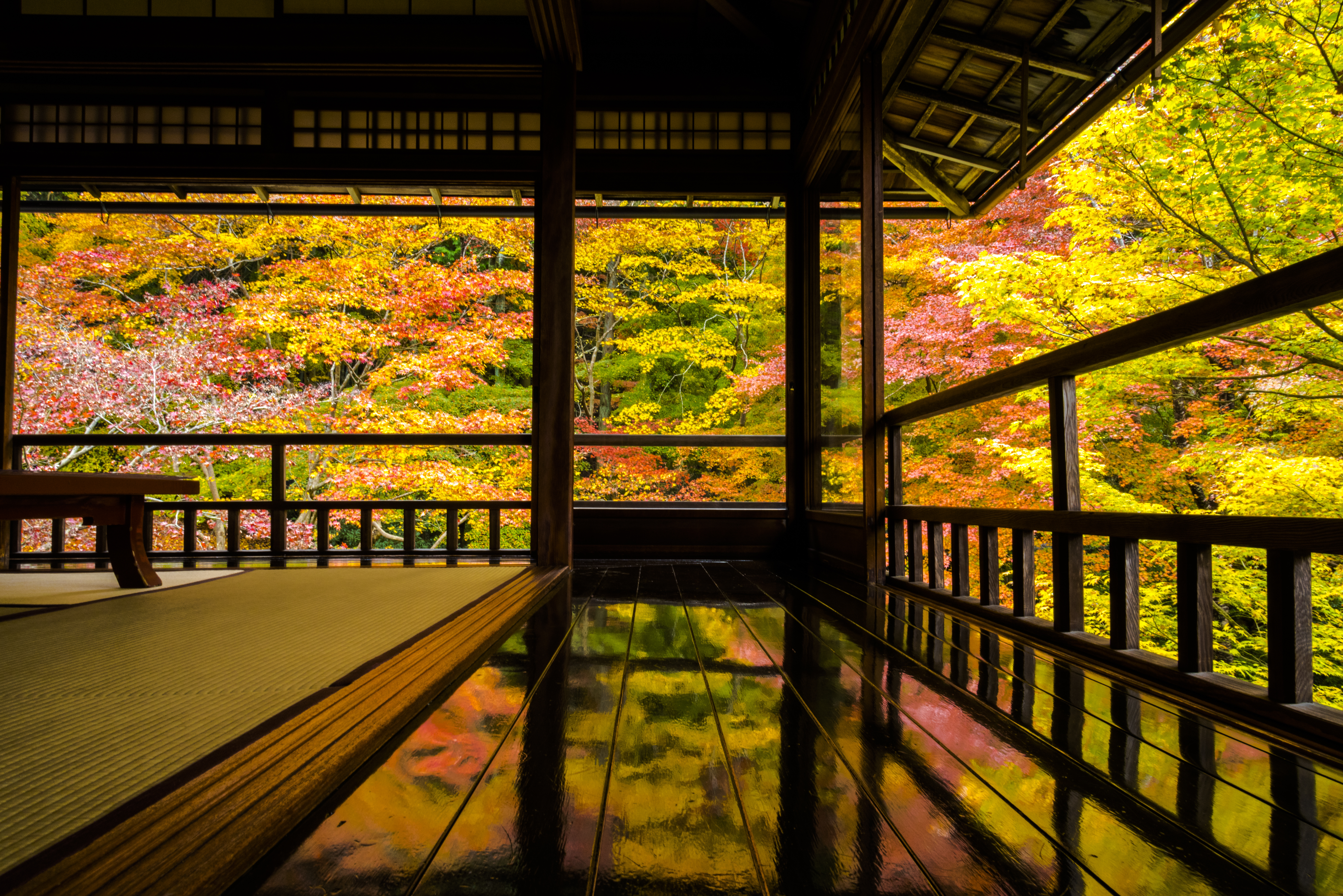
For six weeks each November, the 紅葉 front moves slowly southward across Japan — the mirror image of the spring sakura front, but quieter, longer, more considered. Temple gardens that were green in October turn crimson. Ginkgo avenues catch the low afternoon light and become rivers of gold. The crowds that fill Kyoto in April are gone. The Japanese call this season momiji-gari — maple-hunting — and they take it at least as seriously as hanami.
The colours arrive in sequence. Tokyo’s Meiji Jingu Gaien ginkgo avenue peaks in the final days of November. Kaga’s Kakusenkei gorge a week later. Kyoto’s Eikandō and Tōfuku-ji hold through the first days of December. Kinosaki and Osaka catch the late register, with matsuba crab arriving from the Japan Sea the same week the last maples turn. Reading these dates correctly — which garden on which day, which illumination the night of — is the difference between a beautiful trip and the one you remember every November for the rest of your life.
We have run this route through more than a decade of autumns. We know which temples open privately at dawn for guests with the right introduction. We know the ryokan that hold back rooms each November. We know the hidden gardens of eastern Kyoto down to the week, down to the tree. This tour does not simply show you autumn leaves. It gives you a way of reading Japan — the philosophy of impermanence, the beauty in transience, the care behind the passing of seasons — that changes how you understand everything that follows.
紅葉 is the Japanese word for the autumn colour change: literally “crimson leaves.” It is followed as sakura is followed — by meteorological forecast, by national news, by travellers who time a decade of pilgrimages around it. This tour is built around kōyō: the morning Meiji Jingū Gaien’s ginkgo avenue is at full gold, the night Eikandō is illuminated, the week matsuba crab arrives from the Japan Sea at Kinosaki.
The person who designed this tour leads it
This is not an itinerary assembled by a sales team and handed to a local guide. Every restaurant on this tour has been eaten at by the Tour Director who will sit at the table with you. Every property has been stayed in. Every experience has been vetted firsthand — in Japanese, with the people who provide it.
Two senior Tour Directors accompany every departure. They hold the direct relationships with each chef, each ryokan, each temple. When conditions change — the colour peaks early, rain makes the original plan less beautiful than the alternative — they adapt in real time. You never see the effort. You only feel its absence. That is おもてなし — hospitality that anticipates.
This tour is not for everyone
If you want a tour that ticks autumn leaves off a list in three afternoons, this is the wrong tour. We do not race. We spend the time a garden deserves, then we leave before the crowds arrive for dusk. Unhurried mornings. Free afternoons. 間 — the deliberate space between moments — is what gives each experience its weight.
This tour is for travellers who understand that autumn in Japan is a philosophical season, not a photographic one. For couples who value the reading of the light over the ticking of the boxes, and who are willing to trust a Kyoto-based team that has spent years refining exactly this.
Six regions. Eleven nights. The longer season.
The route begins in Tokyo for the final days of the ginkgo peak, crosses the spine of Japan by first-class Shinkansen to Kanazawa and the onsen country of Kaga, moves south to Kyoto for the maple centrepiece, continues to Kinosaki Onsen on the Japan Sea coast as crab season opens, and closes in Osaka. Every transfer is by private luxury vehicle or first-class rail.
Tokyo
2 nightsThe ginkgo along the Imperial Palace moat turned — a corridor of gold between grey stone and water. The air thinned. The light arriving differently now, lower and warmer, and the city moving inside it at a different speed.
Noh Theatre and Kaiseki Evening
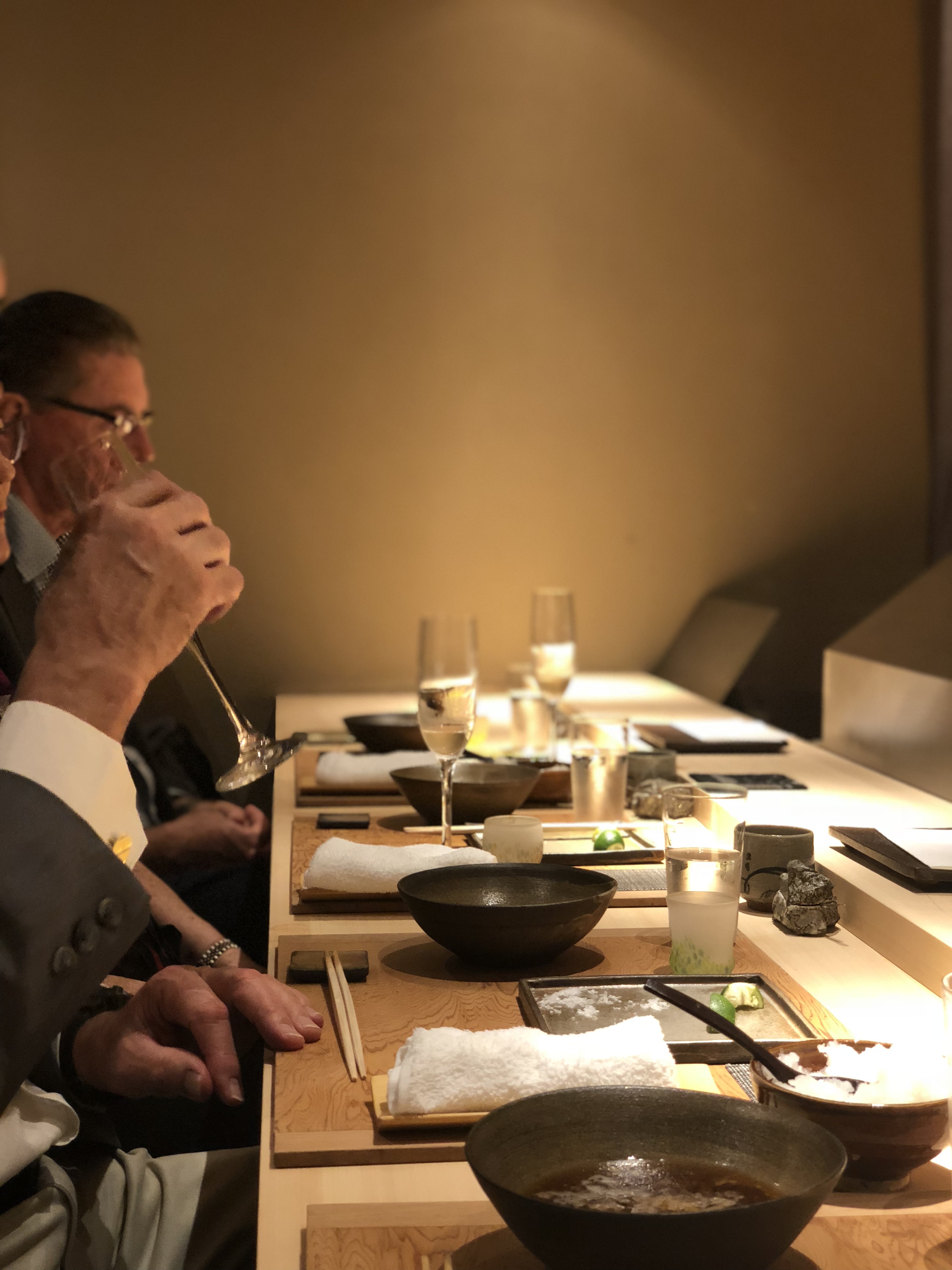
An underground Noh stage beneath a Tokyo shrine — descend the stone steps and enter a world that stopped moving somewhere in the Edo period. A Noh stage at the centre of a lacquered room. A tradition older than Shakespeare, watched close enough to hear the actors breathe. Kaiseki served course by course, interleaved with Kyōgen and Nihon Buyō performances across the evening.
The Ginkgo Avenue and the Edo Garden
Meiji Jingū Gaien at the end of November — three hundred ginkgo trees forming a tunnel of gold that runs four hundred metres from Aoyama toward the sky. Then Rikugien, one of the Edo period’s finest strolling gardens, designed in 1702. The late maples doubled in the pond below.
Kanazawa
1 nightThe city that was never bombed, never burned, never rebuilt. The Maeda clan ruled here for three hundred years on a rice income second only to the Tokugawa themselves, and they spent it on culture — tea ceremony, Noh, ceramics, gold leaf, lacquerware, silk dyeing. Everything that Kyoto created, Kanazawa refined and kept.
Kenroku-en Under the Yukitsuri
The conical rope structures rising from the pines to protect them from the weight of winter snow, installed every November by a team of gardeners who have done this for generations. Yukitsuri against the last of the autumn maples. Snow ropes and red leaves. Winter arriving while autumn holds. Then the walk to Higashi Chaya — the eastern geisha district, the wooden lattice buildings still standing from the Edo period.
Kaga Onsen
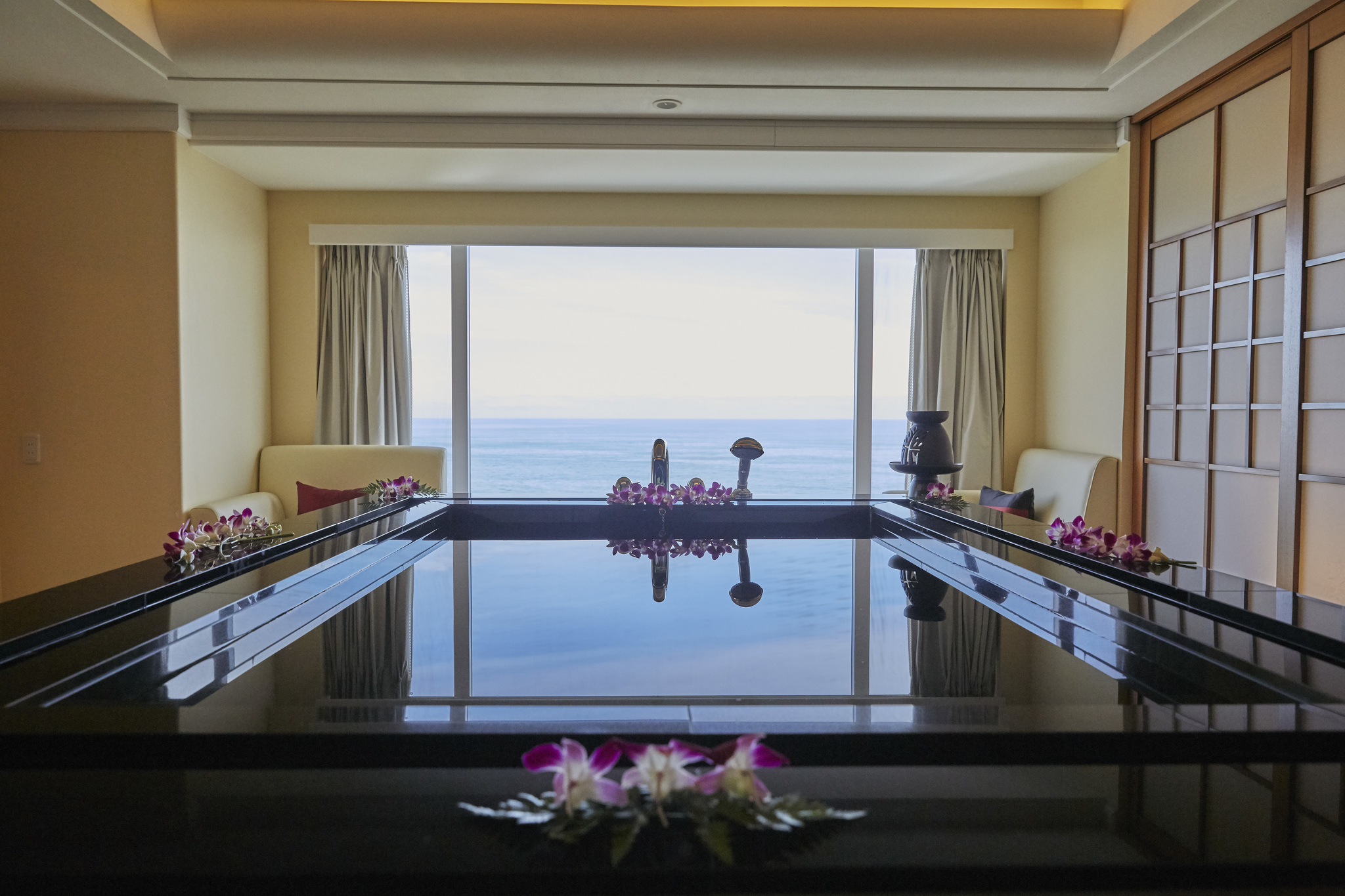
2 nightsSixteen rooms. Every room with its own open-air onsen facing the mountain garden. The corridors silent. The library overlooking the garden. One of the finest ryokan in Japan, and it knows it quietly.
Zuwaigani Crab Kaiseki
The Japan Sea snow crab, the season opened on November sixth, and the kaiseki at Mukayu in November is the reason this property sits on this tour. Zuwaigani — sashimi, grilled, boiled, the miso served in the shell. Kaga vegetables alongside. Sake from Ishikawa breweries. Twelve courses. Every one built around what arrived from the sea this morning.
The Kakusenkei Gorge
The 1.3-kilometre walk along the Daishōji River between Kōrogi Bridge and Kurotani Bridge — the most celebrated autumn walk in Ishikawa. The total-hinoki Kōrogi Bridge. The S-curved Ayatori Bridge designed by Ikkō Tanaka. The gorge walls on both sides, maple and zelkova and cherry, all turned, all layered, red over gold over copper over dark water below.
Kyoto
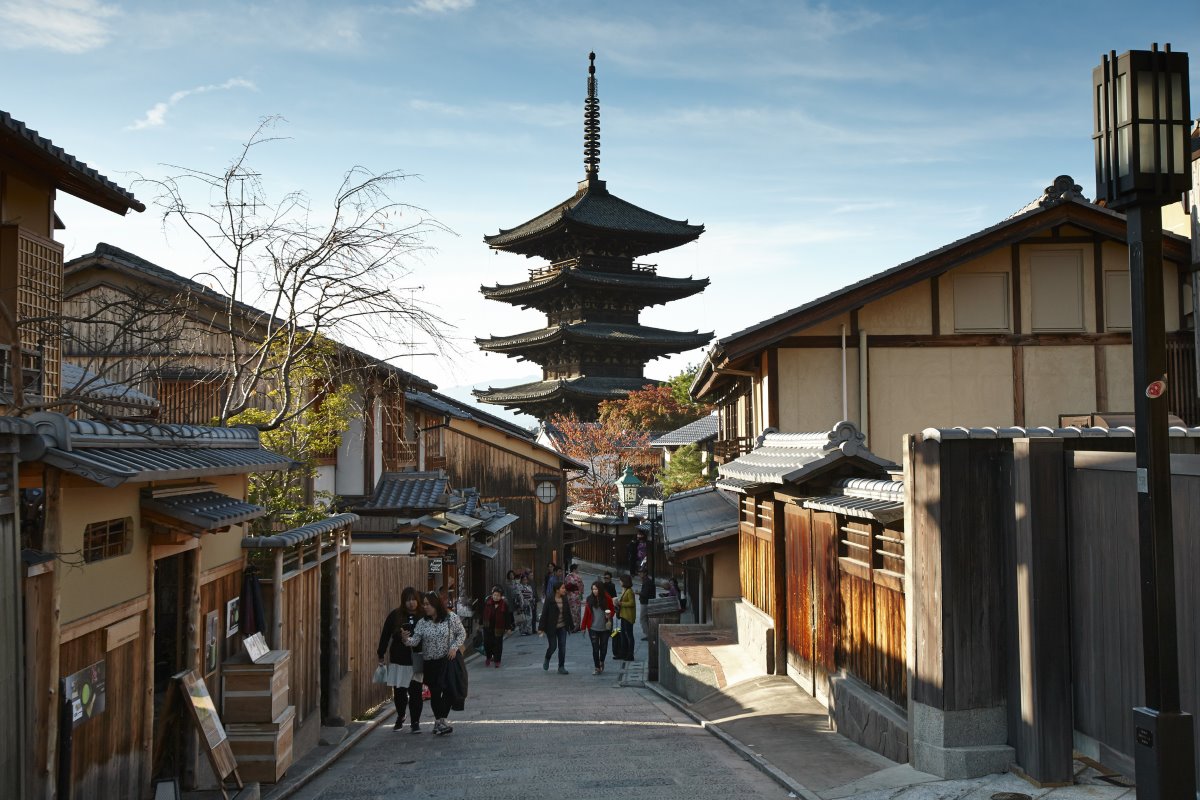
3 nightsThe ancient capital at the peak of its colour. The maples along the Kamogawa, in the temple grounds that line the eastern hills, in the private gardens behind walls that have stood for four hundred years. Three nights in the heart of the city’s autumn. The centrepiece of the tour.
Tōfuku-ji and Eikandō
Morning at Tōfuku-ji: two thousand maples in a single temple compound, the view from the Tsūtenkyō Bridge across a valley where every surface — trunk, branch, moss floor, stone wall — is red or gold or somewhere between. Later, Eikandō Zenrinji — three thousand maples, the pagoda rising above the colour, the reflection pool doubling it. The afternoon holds further Kyoto locations selected from a curated shortlist we hold back for guests.
A Private Ozashiki in Kamishichiken
Kyoto’s oldest geisha district, north of Kitano Tenmangū, where the tradition runs deeper and the tourism runs thinner than in Gion. Two geiko, one maiko, one shamisen musician. The room engaged exclusively for your group. Kaiseki served course by course. The geiko perform, pour sake, play ozashiki games, and speak — if asked — about their lives in a way almost no visitor to Kyoto is ever permitted to hear. The evening everyone talks about for years.
Nara and the Thousand Lanterns
A day south to Nara. Thirteen hundred deer in the park, descendants of the sacred messengers of the Kasuga deity, standing among fallen maple leaves. Tōdai-ji’s Great Buddha Hall — the largest wooden building on earth. Kasuga Taisha approached through a corridor of three thousand moss-covered stone lanterns, a forest that has been sacred and untouched since 841 AD. Tea at Isuien, the garden borrowing Tōdai-ji’s roof as its backdrop.
Kinosaki Onsen
2 nightsA Relais & Châteaux ryokan of one hundred and sixty-five years. Seven public bathhouses along willow-lined canals, reached by wooden geta on stone streets. Tajima beef — the wagyu bloodline from which Kobe beef descends — and matsuba crab landed at Shibayama Port that morning. The tour earns its rest here.
Osaka
1 nightOsaka-jō in early December — the castle grounds holding some of the latest-turning colour in Kansai, over six hundred cherry trees becoming copper and gold above the moat. The hotel on the Okawa River with the castle park across the water. The final night.
Farewell Sushi at the Counter
A counter that belongs to this city. The great product of Osaka’s fishing access and the Seto Inland Sea, at the end of a journey that began beneath a Tokyo shrine eleven days ago. A full stop that is also an argument for returning.
“Spring is the season of arrival. Autumn is the season of recognition — you see the year clearly, you understand what has passed, you are ready for what is coming. The maples know this before we do.”
Your tour ends in Osaka. The season does not.
A three-day Hiroshima and Miyajima extension continues the journey west before closing back in Tokyo — the floating torii of Itsukushima, the Peace Memorial at dusk, and the maple-filled valleys of Momijidani still holding colour into early December.
Hiroshima & Miyajima
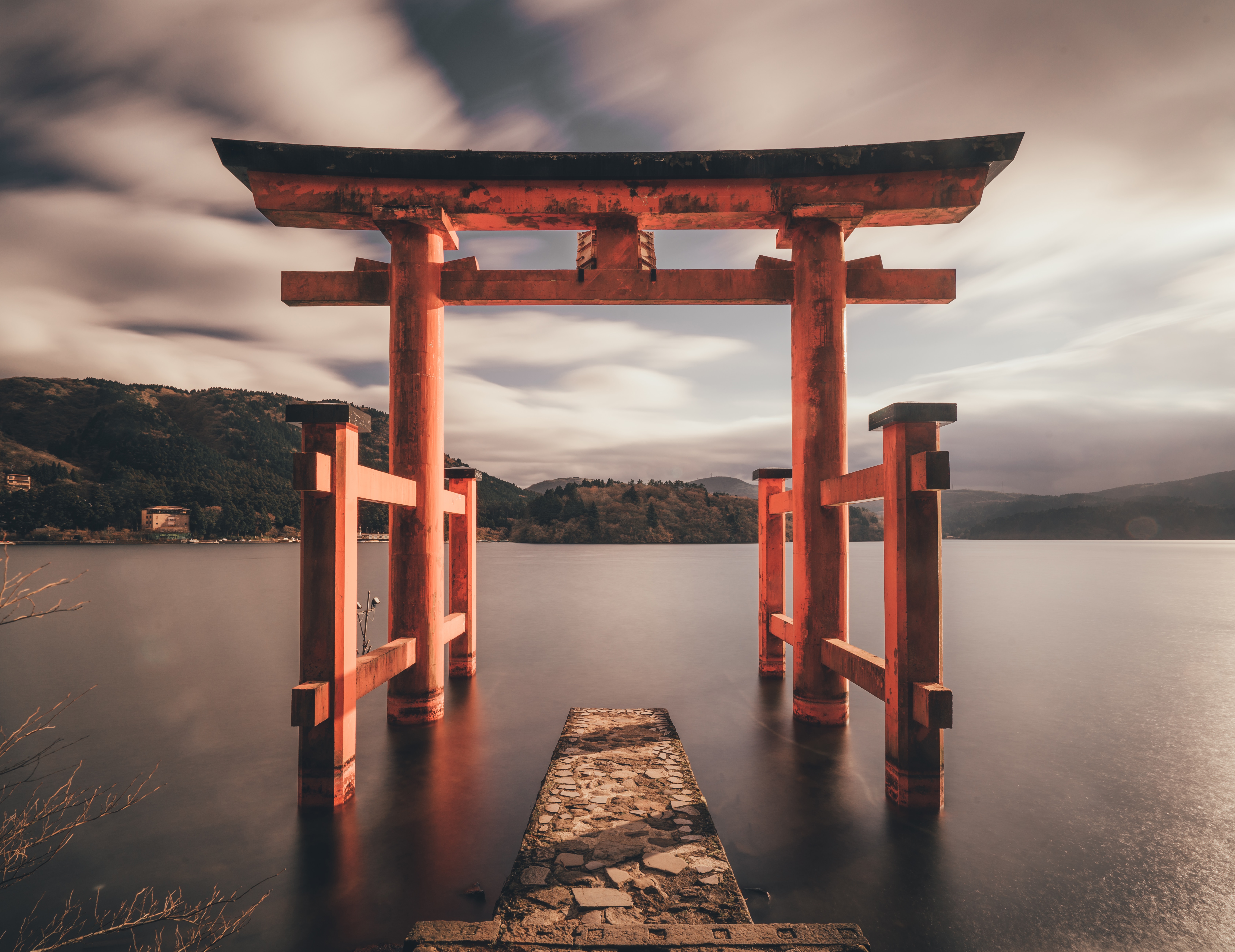
The floating torii gate of Itsukushima at high tide. A luxury ryokan on Miyajima Island. The Peace Memorial at dusk. Return to Tokyo by first-class Shinkansen, bento served on the train, chauffeur waiting at Tokyo Station.
In their words, not ours
“We had been to Japan twice before in spring. Autumn was a different country. The colours, the silence of the gardens, the crab kaiseki at Mukayu — nothing we had done before came close.”
“The private geisha dinner in Kamishichiken was the single best evening of our lives. Two geiko, one maiko, a room that belonged entirely to our group. We have already rebooked for a return.”
“Nishimuraya in Kinosaki with the matsuba crab the week the season opened was the reason we will remember this tour for the rest of our lives. One hundred and sixty-five years of a ryokan and we were treated as though we were the first guests they had ever welcomed.”
Where you stay matters as much as what you see
Every property has been selected for its location, its character, and the quality of its care. The mix of luxury hotels and traditional ryokan reflects the rhythm of the journey itself.
物の哀れ is the Japanese aesthetic awareness that everything is passing — and that this passing is what gives a thing its beauty. A cherry blossom falls. A maple turns red and then goes. The autumn tour is the most mono no aware journey we offer: not because it is sad, but because the season teaches you to read impermanence as a form of richness. The leaves know they are falling. That is why they are beautiful.
One price. No surprises. No calculations.
USD $19,500 per person, twin share. No single supplement. Prices include all applicable taxes.
Questions we are often asked
Eight places. One departure.
23 November – 4 December 2026.
Your last afternoon in Osaka. Osaka-jō surrounded by copper and gold above the moat. The Okawa River at dusk. A farewell sushi counter where the chef has known our Tour Directors for years. You will not be the same traveller who arrived twelve days earlier. Japan does that. Autumn does it quietly.
Submit an enquiry and we will send you the full itinerary — every hotel, every experience, every detail. No obligation. No pressure. Just the information you need to decide.
Guaranteed departure. Your booking is confirmed the moment your deposit is received.
Intimate. Considered. Perfect.