This tour departs on the published date regardless of group size. Your booking is confirmed the moment your deposit is received. No minimum numbers. No cancellation risk.
Request the Full Itinerary →
The autumn the guidebooks do not know about.
The northern kōyō begins two weeks before Kyoto’s. By the time the maples in Arashiyama have started to turn, Oirase Gorge in Aomori is already at peak, the Hachimantai plateau has begun to drop its leaves, and Jozankei in central Hokkaido is moving into its final register. This is the autumn most overseas visitors miss — and the one Japanese travellers themselves prize most. Oku, the Japanese word for the deep interior, is what the north is: quieter, colder, older, more itself.
The route begins in Hokkaido — three nights in a Toyohira River gorge at Jozankei, a night in Hakodate at the edge of the Tsugaru Strait — and descends through the Seikan Tunnel into Tōhoku. Through the beech forest of Tsuta Onsen above Oirase. Across the Hachimantai plateau to Kakunodate, the samurai town time left alone. Into Nyuto Onsen-kyō, where Tsurunoyu has been pouring milky sulphur water into a cypress bath since before the Meiji era. South into Yamagata, where Bashō’s Mogami River still runs through the same canyon it ran through in 1689, in October, at this colour, at this silence.
We have run this route through more than a decade of northern autumns. We know the Oirase sections the road is closed to private vehicles on autumn weekends. We know which Nyuto ryokan hold back rooms each October. We know that Ginzan Onsen is a different town after five o’clock, when the day visitors leave and the gas lamps come on. This tour does not simply show you northern autumn. It gives you a way of reading the quieter Japan — the one that exists beyond the Shinkansen line, the one Matsuo Bashō walked four centuries ago and wrote down as Oku no Hosomichi, the Narrow Road to the Deep North.
奥 is the Japanese word for what lies behind, inside, beyond. The back of a temple is the oku. The inner room of a traditional house is the oku. The word for north — 奥州 or the Oku of Oku no Hosomichi, the title of Bashō’s 1689 travel journal — holds the same kanji. To travel north in Japan is to travel inward. This tour follows Bashō’s rough line through the northern provinces, three hundred and thirty-seven years after it was written.
The person who designed this tour leads it
This is not an itinerary assembled by a sales team and handed to a local guide. Every ryokan on this tour has been stayed at by the Tour Director who will sit at the table with you. Every forest walk has been walked. Every supplier relationship has been built — in Japanese, over years, in the north where those relationships matter most.
Two senior Tour Directors accompany every departure. They hold the direct relationships with each chef, each ryokan owner, each mountain road’s conditions in October. When the weather shifts — and in Hokkaido in October it shifts — they adapt in real time. You never see the effort. You only feel its absence. That is おもてなし — hospitality that anticipates.
This tour is not for everyone
If you have not been to Japan before, we would usually suggest our central Honshu tours first. The north is where travellers come to return, not to start. It moves at the pace of the land. The drives are longer. The ryokan are older. The cuisine is saltier, earthier, built for winter. We do not apologise for any of this — it is the point.
This tour is for travellers who have seen the Kyoto and Tokyo of the guidebooks and who want the country the Japanese keep quiet about. For couples who read the literature, who prize the empty gorge over the packed temple, and who are willing to trust a Kyoto-based team that knows the north as well as it knows the centre.
Six regions. Eleven nights. Bashō’s road, four hundred years on.
The route begins in central Hokkaido at the Jozankei onsen valley, moves south to Hakodate, crosses the Tsugaru Strait by Shinkansen into Aomori, and travels inland through the Oirase Gorge, the Hachimantai plateau, the samurai town of Kakunodate, the onsen-kyō of Nyuto, and the gas-lit valley of Ginzan before the final Shinkansen south to Tokyo. Private luxury vehicles through the mountain roads. Green-car Shinkansen on the two long rail segments.
Jozankei
3 nightsCentral Hokkaido at the end of the road. A property above the Toyohira River gorge, the autumn canopy closing over volcanic rock below. The longest stay at any single property on this tour — three nights to cross the timezone, inhabit the bath, and watch the light settle.
Hōheikyō Dam and the Futami Gorge
Twenty minutes upstream, a natural amphitheatre of mountain faces — maple, birch, Japanese rowan, mountain ash turning red, gold, and copper against dark volcanic rock. The electric bus through the tunnel is the only way in: no tour coaches, no crowds. Back at Jozankei, the Futami Gorge walk below the suspension bridge — thirty minutes of canopy and river, the finest short gorge walk in Hokkaido.
Hakodate
1 nightSouth through the Shikotsu–Toya corridor to the Oshima Peninsula. Onuma Park on the way — three lakes at the foot of Mount Komagatake, the broken summit reflected in still water, the shoreline in full October colour. Hakodate at nightfall — the former treaty-port district, the rooftop onsen above the bay, one of the three finest night views in Japan spread below.
Oirase & Lake Towada
2 nightsUnder the Tsugaru Strait by Shinkansen — twenty-three minutes of darkness beneath the sea, then Honshu. A private van to the Towada-Hachimantai plateau, into beech forest that closes overhead. Tsuta Onsen has stood here since the Meiji era; the main bath is built directly over the source, the hot spring bubbling up through the wooden floor beneath your feet. Nowhere else in Japan offers this.
The Oirase Stream Walk
Fourteen kilometres of river flowing from Lake Towada through a gorge of beech, maple, Japanese oak, and ancient moss-covered boulders. Waterfalls named Kumoi-no-taki, Chōshi Ōtaki, Shirokenbu-no-taki — each framed by the canopy overhead. In mid-October, the gorge is at peak colour. The light filtering through in gold and red. The water the only sound besides your footsteps on the trail. Your Tour Director selects the sections based on that morning’s colour intelligence.
Tsuta-numa at Dawn
Five minutes from the onsen on a boardwalk through the beech forest. At first light, the water becomes a mirror — the canopy reflected without distortion, the colour doubled and inverted. One of the most photographed autumn scenes in Tōhoku. An optional pre-breakfast walk that rewards the early alarm entirely.
Kakunodate
1 nightA samurai town preserved since the Edo period. The 武家屋敷 — samurai residences — line a broad avenue shaded by weeping cherry trees. In October those trees turn gold and amber, and the avenue takes on a quieter character, the dark wooden fences of the samurai houses visible through the thinning canopy. The cherry-bark craft workshops — Kakunodate’s living tradition — produce tea caddies, trays, and boxes from the polished bark of the mountain cherry.
Nyuto Onsen-kyō
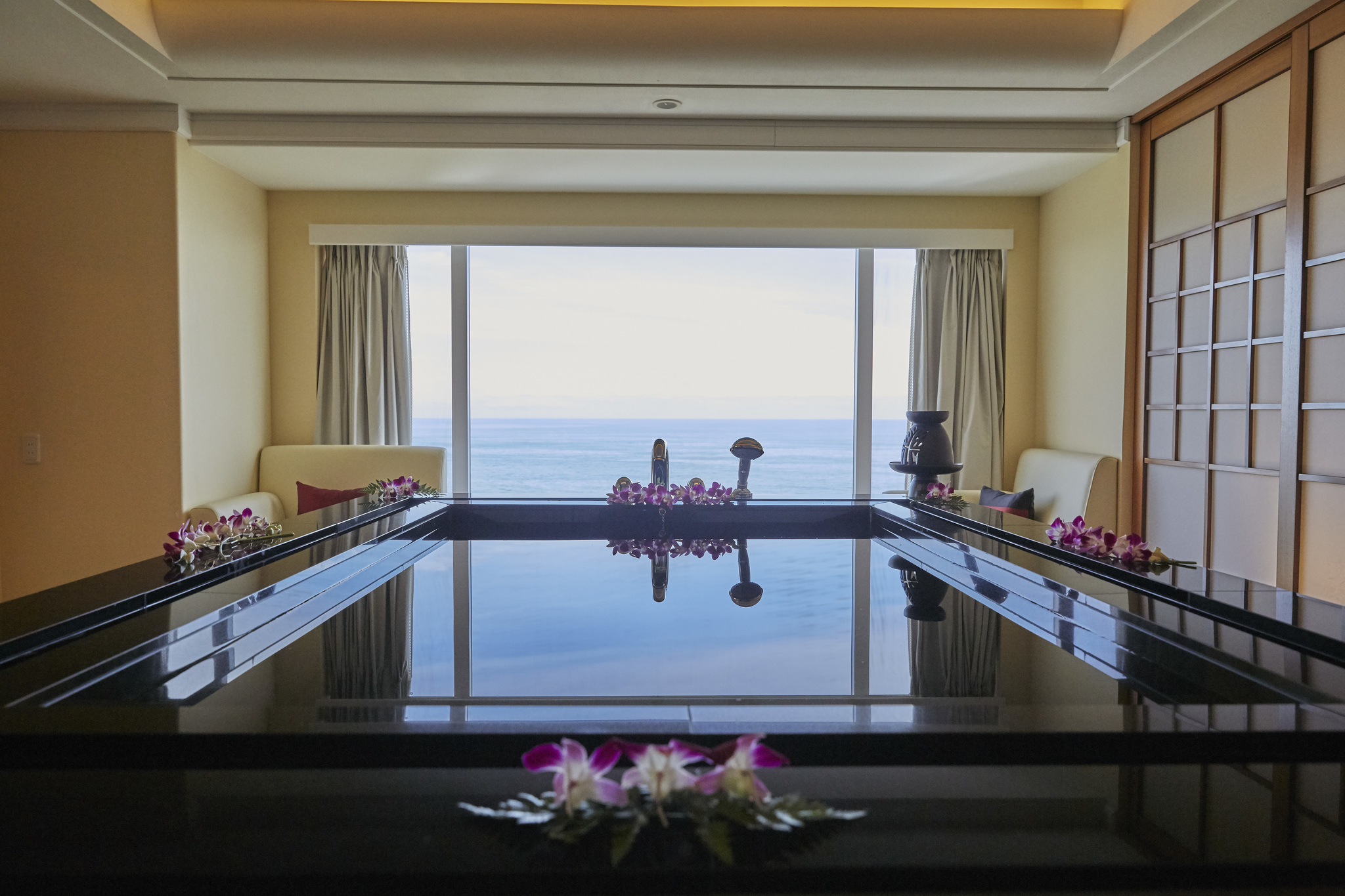
2 nightsThe hot spring village at the end of the road. Seven ryokan scattered along a mountain stream, each with its own source, its own character. Taenoyu sits between two streams — gold-tinged iron and clear sulphur — with an outdoor bath where they meet. The beech canopy above the baths at peak colour. This is the emotional centre of the tour. It sits at the sixty-seven percent mark of twelve days — the point where the strongest memory is formed.
Tsurunoyu — 350 Years of the Same Bath
The oldest and most celebrated onsen in Tōhoku. Milky white sulphur water in an open-air bath surrounded by beech forest, the thatched-roof buildings visible through the steam, the mountains rising behind. The mixed outdoor bath is communal, elemental, stripped of every modern intervention. Not a spa experience. A geological fact expressed as a three-and-a-half-century-old cultural practice.
Ginzan Onsen
2 nightsA hot spring town built in the 1920s on the site of a sixteenth-century silver mine. The Ginzan River runs through the centre, gas lamps lining both banks, three-storey wooden ryokan rising on either side. No cars. No modern signage. At night the gas lamps light the steam rising from the river, the wooden facades glow, and the town becomes the image that launched a thousand tourism posters — and earned them. Fujiya is twelve rooms, redesigned by Kuma Kengo — the architect of Tokyo’s National Stadium.
The Mogami River by Private Boat
In 1689, Matsuo Bashō descended the Mogami River as part of his journey to the Deep North. He wrote: <em>Gathering the rains of May, how swift the Mogami River.</em> The river that carried Bashō still flows through the same canyon, between the same mountain walls, through the same forests. In October, those forests are on fire. Your private charter — no other passengers, no PA system, no recorded commentary — descends sixty minutes of river that no road reaches. Bashō’s three-hundred-and-thirty-eight-year-old poem is the only text that applies.
“I have walked the Oirase gorge fifteen times. On the right morning — mist, low light, a single heron in the shallows — it does something no Kyoto temple can. The north makes an argument the south cannot.”
Your tour arrives in Tokyo. Stay a little longer.
A two-night Tokyo extension closes the journey in the city the Yamagata Shinkansen delivers you to. Details confirmed on enquiry.
Tokyo
Two additional nights in the capital at a luxury city property. Programme tailored to the remaining autumn registers still holding in Tokyo at the tour’s closing week — the Rikugien illumination if running, a farewell counter, the city at a slower pace.
In their words, not ours
“We had done Kyoto, Tokyo, and Osaka on a previous trip. This one was the one. Ginzan Onsen at night was the single most beautiful place either of us has stayed, anywhere in the world.”
“The Oirase walk with the Tour Director reading the morning’s colour was the moment we understood what this tour was actually for. The photographs do not tell you what the forest sounds like.”
“Tsurunoyu was three and a half centuries of a bath, and the hour we spent there was the closest either of us have come to understanding Japan without speaking a word of it. Taenoyu held us for two nights and we left wishing for three more.”
Where you stay matters as much as what you see
Northern Japan’s ryokan tradition is older and quieter than the one the rest of the country exports. Every property on this route was chosen over a decade of visiting it in person, in October, in the weather it was built for.
静寂 is not the absence of sound. It is the Japanese aesthetic principle of a silence that is doing something — the stillness inside a tea room, the pause in a Nō drama, the moment after a bell stops ringing. The north of Japan in October holds seijaku across entire landscapes. A gorge without people. A ryokan valley before dawn. A river Bashō drifted down in 1689. This tour is designed around it.
One price. No surprises. No calculations.
USD $19,500 per person, twin share. No single supplement. Prices include all applicable taxes.
Questions we are often asked
Eight places. One departure.
2 – 13 November 2026.
Your last morning in Ginzan. The gas-lit street in dawn light — a different town from the one at dusk. The Yamagata Shinkansen waiting at Oishida. Three and a half hours south through the mountains, into the Kantō plain, into Tokyo. You will not be the same traveller who arrived twelve days earlier. Japan does that. The north, more than any other part of the country, does it the most quietly.
Submit an enquiry and we will send you the full itinerary — every hotel, every experience, every detail. No obligation. No pressure. Just the information you need to decide.
Guaranteed departure. Your booking is confirmed the moment your deposit is received.
Intimate. Considered. Perfect.